


Why Lift Safety Training Is Mandatory in Today’s Industry
Why Lift Safety Training Is Mandatory in Today’s Industry
The lift and escalator industry has transformed dramatically over the past decade. With rapid urbanisation, rising safety expectations, and increasingly complex technologies, properly trained professionals are now more important than ever. Today, lift safety training is not just an added benefit — it is a mandatory requirement to protect lives, reduce accidents, and ensure reliable vertical transportation in every modern building.
Here’s why safety training is essential in today’s lift industry.
🔧 1. Lifts Are More Complex Than Ever
Modern elevator systems are no longer simple mechanical structures. Today’s lifts include:
- AI-powered monitoring
- IoT sensors
- Microprocessor-based controllers
- High-speed motors
- Energy-efficient drives
- Advanced braking and door systems
With such complex systems, technicians must be trained in both mechanical and electrical/electronic safety.
Improper handling can lead to serious hazards — for both the technician and the passengers.
🛡️ 2. Safety Regulations Are Stricter Worldwide
Governments and regulatory bodies worldwide enforce strict rules requiring:
- Regular maintenance
- Annual inspections
- Mandatory safety checks
- Certified technicians only
- Compliance with international safety standards
Lift safety training ensures technicians understand and follow these regulations, preventing violations, shutdowns, and costly penalties for building owners.
⚠️ 3. Preventing Accidents & Fatalities
Lifts and escalators move millions of people daily. Even a small error can lead to injury or fatality.
Common causes of accidents include:
- Improper lockout/tagout
- Incorrect wiring
- Poor lubrication
- Faulty door mechanisms
- Lack of emergency preparedness
Safety training equips technicians to identify hazards before they become accidents, making lifts safer for everyone.
🔍 4. Aging Infrastructure Increases Risk
Many buildings worldwide — especially older residential and commercial towers — still operate lifts installed 20–30 years ago.
Aging lifters often suffer from:
- Worn-out components
- Outdated safety features
- Frequent breakdowns
- Electrical failures
Properly trained technicians are crucial to handling these older systems safely and upgrading them to modern standards.
👨🏫 5. Better Troubleshooting & Faster Emergency Response
In emergencies like lift entrapment, malfunctioning brakes, power failures, or sensor problems, trained professionals must respond quickly and correctly.
Safety training teaches:
- Safe rescue operations
- Emergency procedures
- Risk assessment
- Controlled shutdown & restart techniques
- Communication with rescue teams
Without proper training, technicians may place themselves and passengers at risk.
⚙️ 6. Smart Buildings Need Smart Technicians
As buildings adopt smart technologies, technicians must be able to:
- Handle computerized controllers
- Work with remote monitoring systems
- Interpret digital diagnostics
- Fix integrated building systems
Safety training keeps technicians prepared for the future of the industry.
🧯 7. Protecting the Technician’s Own Safety
Technicians work in high-risk environments:
- Shaft pits
- Motor rooms
- Tight spaces
- High-voltage panels
- Moving machinery
Lift safety training covers:
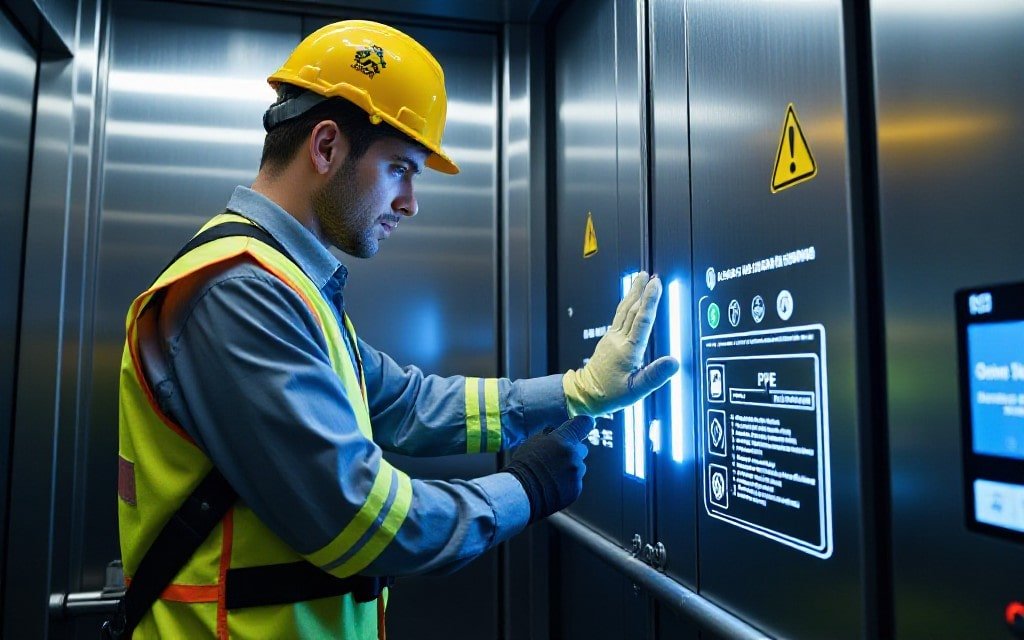
- PPE (Personal Protective Equipment)
- Fall protection
- Electrical safety
- Lockout/Tagout
- Manual handling
- Working at heights
This ensures technicians go home safely every day.
🏗️ 8. Essential for Career Growth & Professional Recognition
Certified, safety-trained technicians are valued by employers because they:
- Reduce breakdowns
- Lower accident risks
- Improve passenger safety
- Enhance building reliability
- Follow proper SOPs
This leads to better opportunities, promotions, and higher salaries in the lift and escalator industry.
⭐ Conclusion
Lift safety training is no longer optional — it is a mandatory foundation for anyone working in the lift and escalator industry.
With modern technologies, stricter regulations, aging infrastructure, and the need for zero-accident environments, safety training ensures that technicians can work confidently, efficiently, and responsibly.
Safe lifts protect not only passengers, but also the technicians who maintain them.
🎓 Train with Elevator Academy Singapore
At Elevator Academy Singapore, we provide internationally recognised lift safety and technical training designed to:
- Build strong safety habits
- Prepare you for real-world situations
- Meet global industry standards
- Boost your employability
Whether you’re new to the industry or an experienced technician, the right training keeps you safe and future-ready.